.svg)
June 22, 2026
If you have started looking into longevity medicine here in Silicon Valley, you have probably noticed there is no shortage of options. Testing labs, mail-in panels, concierge practices, executive physicals, app-based programs, they all offer some version of a longer, healthier life. The hard part, honestly, is not finding options. It is telling them apart, and working out which one genuinely fits what you are looking for. Learn more about longevity medicine in Los Gatos.
This guide is meant to make that easier. We will walk through what a longevity clinic really does, how a full program differs from a basic lab subscription, and the handful of questions worth asking before you commit to anyone, including us.
A longevity clinic is a medical practice built around healthspan, the number of years you stay genuinely well rather than simply alive. The work is to measure how your body is performing today, notice the early signs of decline before they harden into disease, and address the drivers of aging while there is still plenty of room to act. Where conventional primary care is designed to respond once something has gone wrong, longevity medicine spends its attention on the years before that, using comprehensive diagnostics, biological age tracking, and plans a physician actually builds with you.
It is a broad category, which is part of why it pays to look closely. The word longevity now stretches across everything from low-cost lab subscriptions to high-end concierge programs, and those are very different things wearing a similar label.
A full program starts with a diagnostic baseline that goes well beyond a standard physical. At our Los Gatos clinic, every member begins with the same foundation regardless of tier. That foundation includes more than 80 blood biomarkers, covering hormones, metabolic and inflammatory markers, cardiovascular risk, nutrient status, and heavy metals. It adds body composition analysis, with DEXA scanning in the higher tiers, along with VO2 testing, functional measures like grip strength, sit-to-stand, plank, and balance, and your biological age through PhenoAge, a validated blood-based formula. A standard annual physical checks roughly 20 markers, so the jump in detail is considerable, and that added detail is what makes the fuller picture so useful.
It helps to picture the field as three broad models, each serving a real but different need. Data-only services test you and hand back your results at a relatively low yearly cost, sometimes with an automated summary. They are a genuinely useful starting point. What they typically do not include is a physician who sits with you, interprets the full picture, and treats what it surfaces, so the next step is left to you.
Testing facilities, the DEXA and VO2 providers around San Jose and the wider Bay Area, offer individual scans that work nicely as one-off data points. What they are not set up to do is connect those numbers together or build ongoing care around them.
Physician-led memberships sit at the other end. A doctor orders the diagnostics, interprets them, builds a 12-month plan, prescribes treatment when it is clinically indicated, and retests to confirm progress. That is the model at Lifetime Performance Medicine, and it costs more than data alone because it includes the medicine. None of these is the wrong choice. The right one simply depends on what you are after. Data-only answers the question what are my numbers? A physician-led program is built to answer the next one: what should I do about them, and is it working?
Pricing varies widely by model, and that is to be expected. Lab-subscription services are the most affordable, and they focus on giving you data rather than ongoing care. Individual scans are inexpensive on their own, though the costs add up once you are paying for several and still piecing the results together yourself. Physician-led memberships cost more because they fold in the diagnostics, the plan, the treatment, and the retesting.
At Lifetime, Foundations starts at $4,500 a year. Optimization and Executive are custom plans, priced at consultation around the depth and frequency you want. Memberships are not billed through insurance.
Wherever you end up, a good clinic will welcome these questions rather than deflect them. Ask who actually reads your results, since a physician should walk you through them in person, not hand you a dashboard or a coach. At Lifetime, every member sees Dr. Richard Nguyen, DO twice a year, with checkpoint visits led by Morgan Carmean, NP. Ask whether there is a real plan or just data, and request to see what a member plan looks like. If the only deliverable is a PDF of lab values, that is a data service, which is perfectly fine if data is what you want, though it is a different thing from care.
Ask how progress is measured, and look for a defined scoring system and scheduled retesting; we translate your results into the Lifetime Body Score across six domains and recalculate through the year. Ask what happens when something turns up, because a program that can test but not treat will simply hand the finding back to you to solve elsewhere. Ask whether the testing is on-site, since coordinating separate appointments at different facilities can be a lot to juggle, and all of ours happens in one place in Los Gatos. Finally, ask whether it works alongside your primary care doctor, where the answer should be a warm yes, and whether the pricing is explained clearly before you commit.
It really depends on what you would do with the information. If you simply want a snapshot of your numbers, an affordable panel does that well. A physician-led program tends to earn its cost when a few things are true at once: you have symptoms or risks worth investigating, like fatigue, slow recovery, family history, or a shift in weight; you want treatment and accountability rather than data alone; and you are ready to follow a structured plan. Many of our members in Los Gatos, Saratoga, Campbell, and San Jose came to us after a data-only service told them what was wrong, but not what to do next.
What is the difference between a longevity clinic and concierge medicine?
Concierge medicine is enhanced access to primary care, the same scope with more time and attention. A longevity clinic has a different scope altogether: performance diagnostics, biological age, and proactive optimization. Many members happily keep their concierge or primary care doctor and add a longevity program alongside it.
Do longevity clinics take insurance?
Most operate on membership pricing outside insurance, and Lifetime is no exception.
How do I find a longevity doctor near me in the South Bay?
Look for physician-led programs rather than testing menus, then bring the questions above. Lifetime Performance Medicine is in Los Gatos at 15965 Los Gatos Blvd #201 and serves members across Santa Clara County.
How long before I see results?
Many members see early markers begin to shift within the first few months. A full 12-month cycle is the honest unit of progress, which is why our plans are built around that timeline.
Is this the same as an executive physical?
An executive physical is a one-day snapshot. A longevity membership is a continuous program: baseline, plan, treatment, and retesting. The snapshot tells you where you are; the program is about where you are headed.
The right longevity clinic should be able to show you, with real evidence, where your body stands and what to do next. Book a consultation with Dr. Nguyen and Morgan at our Los Gatos clinic, and we will walk you through what your first 12 months could look like.
Every membership begins with the same baseline panel and the same two visits: an intake with Morgan, then your Body Score reveal with me. If you have been guessing about your health for years, the first step is to stop guessing.
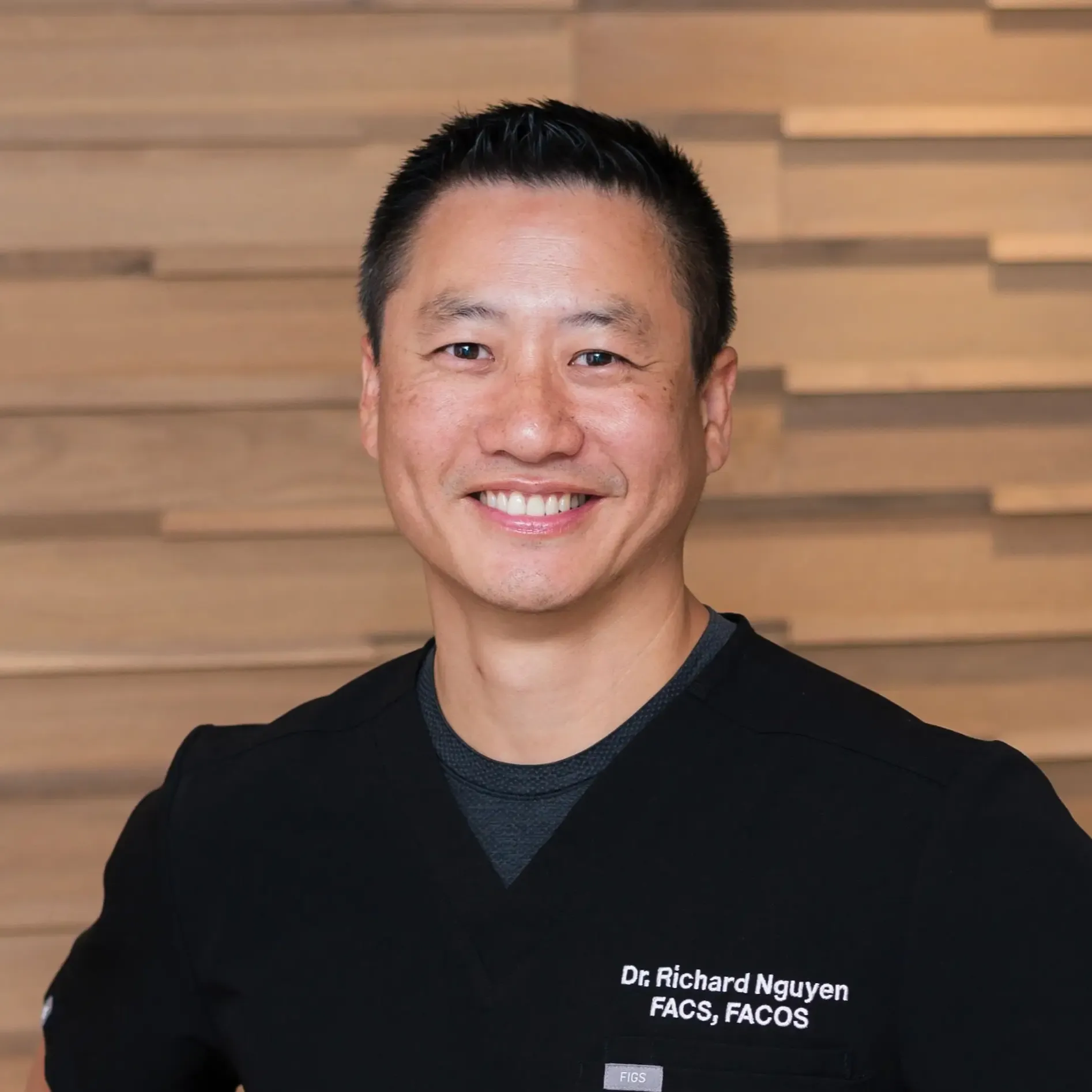
Dr. Nguyen has practiced in Los Gatos since 2007. He leads every membership: the Body Score reveal, the 90-day plan, and the annual review.
Book a consultation with Dr. Nguyen and Morgan. We'll walk you through your options and answer every question.

.jpg.avif)
