.svg)
June 26, 2026
If you have noticed a few small changes lately, workouts that take a little longer to bounce back from, lighter sleep, a dip in energy or drive, or a shift in body composition even though your habits have not changed, you are not imagining it. It is one of the most common things we hear. Usually it gets mentioned in passing at an annual physical, the basic labs come back normal, and the takeaway is that this is simply part of being in your 30s or 40s. Learn more about hormone replacement therapy in Los Gatos.
Sometimes that really is the whole story. Other times it is not. Hormonal change can begin earlier than many people expect, it often shows up as exactly these kinds of symptoms, and plenty of people have simply never had the testing that would give them a clear answer either way. This is a guide to what that testing should include, what the symptoms can mean, and what good care actually looks like.
The early signs are usually subtle and easy to explain away. The most common are a persistent tiredness that a good night of sleep does not quite fix, slower recovery after exercise, muscle that responds less to the same training, a little more weight settling around the middle, lower libido, a foggier head, and a flatter mood. For women, irregular cycles, disrupted sleep, and changes in temperature regulation often signal perimenopause years before it is formally named. None of these symptoms proves a hormonal cause on its own, and that is exactly what testing is for.
It is easy to treat each of these in isolation, more caffeine for the fatigue, a new program for the plateau, and quiet frustration for the rest. Think of the symptoms as smoke. A complete panel is what helps you find the source.
There are a few reasons a standard physical can reassure you while something is genuinely shifting. A routine visit often skips hormones entirely, or checks a single testosterone or TSH value and moves on. Lab reference ranges are also built from the whole population rather than a thriving one, so a result that lands within range can still sit well below your own healthy baseline. And hormones work as a connected system, not a row of independent numbers. Total testosterone means little without SHBG and free hormone context, thyroid health is more than TSH alone, and cortisol patterns matter alongside everything else. A complete picture asks for a complete panel, read by a clinician who treats the system rather than the single value.
At Lifetime Performance Medicine in Los Gatos, hormone testing is never run on its own. It is part of a baseline panel of more than 80 biomarkers, because hormonal symptoms overlap so heavily with metabolic and inflammatory causes that looking at hormones alone can be misleading. The hormonal portion covers total testosterone, SHBG, and thyroid function, read alongside the surrounding context: the metabolic markers, inflammatory markers, and nutrient levels that quietly shape how your hormones behave. For women in the perimenopausal window, the conversation and the panel cover cycle history, sleep, and symptoms together with the labs, because hormone levels fluctuate and a single draw rarely tells the whole story.
Testing is only the first step, and the part that follows is where it becomes care. At our Los Gatos practice, it tends to go like this. Your intake visit with Morgan Carmean, NP covers your history, your goals, the full blood draw, body composition, and functional testing. At your next visit, Dr. Richard Nguyen, DO walks you through the results, including where your hormones sit inside your Lifetime Body Score, and you build the first 90 days of a plan together.
When the data supports it, hormone optimization is prescribed inside that plan, bioidentical hormone therapy for men and women, with dosing decisions made by your physician based on your labs and how you respond. And it does not stop there. Hormone treatment works best with regular follow-up labs, so mid-year checks and checkpoint visits track your response and adjust the dose based on the evidence. We do not offer hormones on their own. They are one tool inside a 12-month plan, used when your numbers and your symptoms point that way.
When it is appropriate and properly monitored, hormone therapy has solid support in the current evidence, and a large trial published in 2023 found testosterone therapy did not raise the rate of major cardiac events in men with low levels and meaningful heart risk. Its safety depends a great deal on the patient, the dose, and the oversight, which is much of why physician-led care matters here. Many of the worries people carry about hormone therapy trace back to unmonitored use, where there is little follow-up or lab work. Because cardiovascular markers, metabolic health, and inflammation all live on the same panel we draw, hormone decisions are never made in isolation.
Standalone hormone panels are widely available, though they rarely come with much interpretation. At Lifetime, hormone testing is included in every membership baseline, and treatment is prescribed within your plan when it is indicated. Foundations starts at $4,500 a year, and members come to us from Los Gatos, Saratoga, Campbell, San Jose, and across Silicon Valley.
At what age should I get my hormones tested?
If you have symptoms, the best time is now. If you do not, a baseline in your early 30s is still worth having, because later results can then be compared against your own numbers rather than a broad population range.
Can hormonal change affect my biological age?
It can. Hormonal health interacts with the markers that drive biological age formulas like PhenoAge, especially the metabolic and inflammatory ones, so addressing a deficiency often improves the surrounding numbers too. Our guide to biological age testing explains how we track this.
Do you treat both men and women?
Yes. Dr. Nguyen and Morgan care for hormonal change in men, and in perimenopausal and menopausal women, at our Los Gatos clinic.
Will I be on hormones forever?
Not necessarily. Some members need ongoing support, while others improve their numbers through targeted metabolic and lifestyle work and taper off. Your follow-up labs help make that decision with you.
Is hormone testing covered by insurance?
Lifetime memberships are not billed through insurance.
If you have been wondering whether there is more to the story than normal aging, a thorough panel can give you a real answer. Book a consultation at our Los Gatos clinic, and we will walk you through the testing and what your numbers would mean for you.
Every membership begins with the same baseline panel and the same two visits: an intake with Morgan, then your Body Score reveal with me. If you have been guessing about your health for years, the first step is to stop guessing.
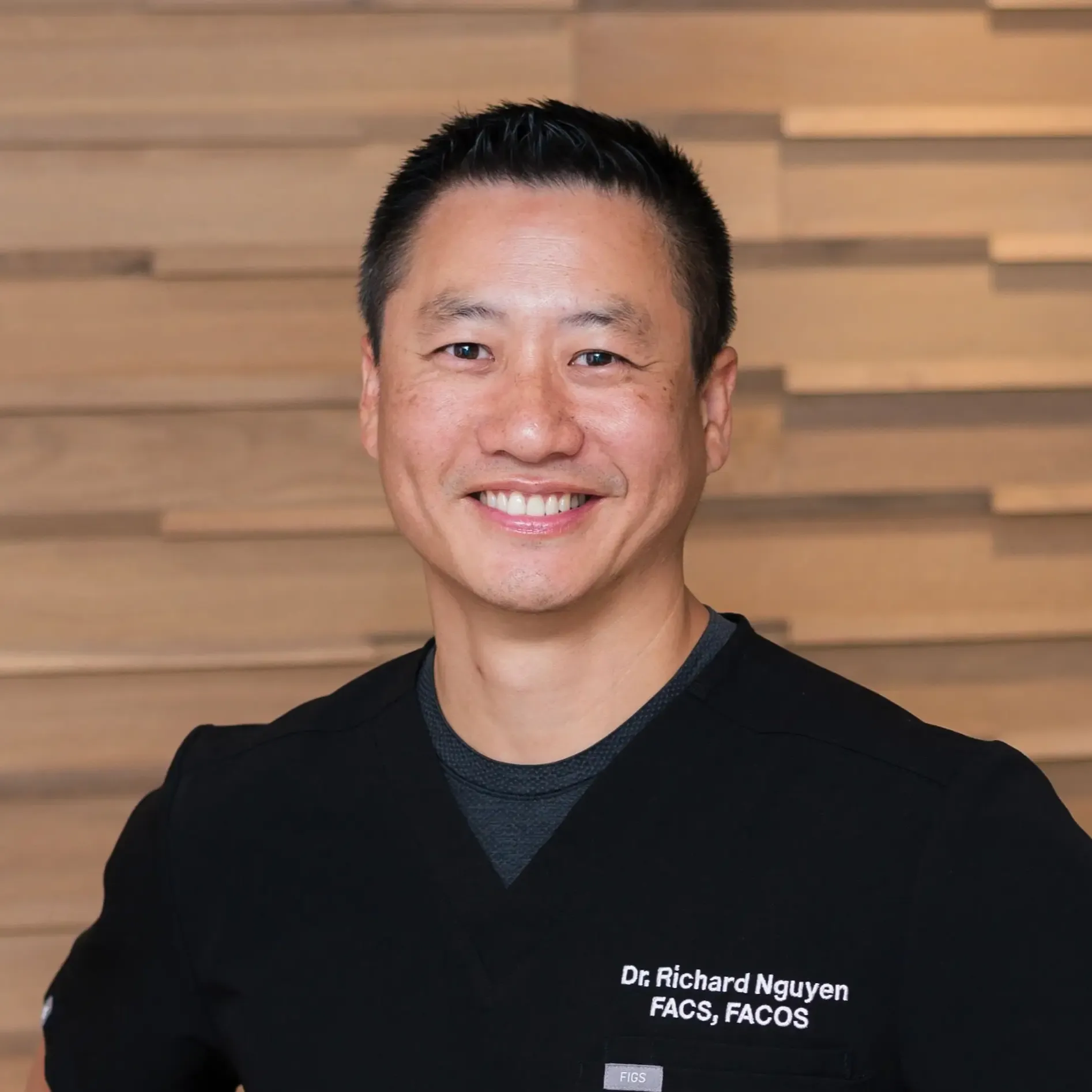
Dr. Nguyen has practiced in Los Gatos since 2007. He leads every membership: the Body Score reveal, the 90-day plan, and the annual review.
Book a consultation with Dr. Nguyen and Morgan. We'll walk you through your options and answer every question.

.jpg.avif)
